Size Matters — Especially When You're Dripping Wet and Freezing
We've all been there. You're halfway through rinsing the salt out of your hair after a solid session at Steamer Lane, and the water turns ice-cold. Your post-surf shower shouldn't run cold halfway through. And nine times out of ten, the culprit isn't a broken water heater — it's a water heater that's simply too small for your household.
Here in Santa Cruz, we see this all the time. A family of four crammed into an adorable Westside cottage with a 30-gallon tank that was probably installed when Reagan was president. Or a couple in Capitola running a 75-gallon behemoth for a one-bedroom bungalow, paying way more on energy bills than they need to.
We're going to walk you through exactly how to pick the right size water heater so every shower stays hot, every dishwasher load gets clean, and you're not burning cash heating water nobody's using.
The Quick Sizing Chart: Tank Water Heaters
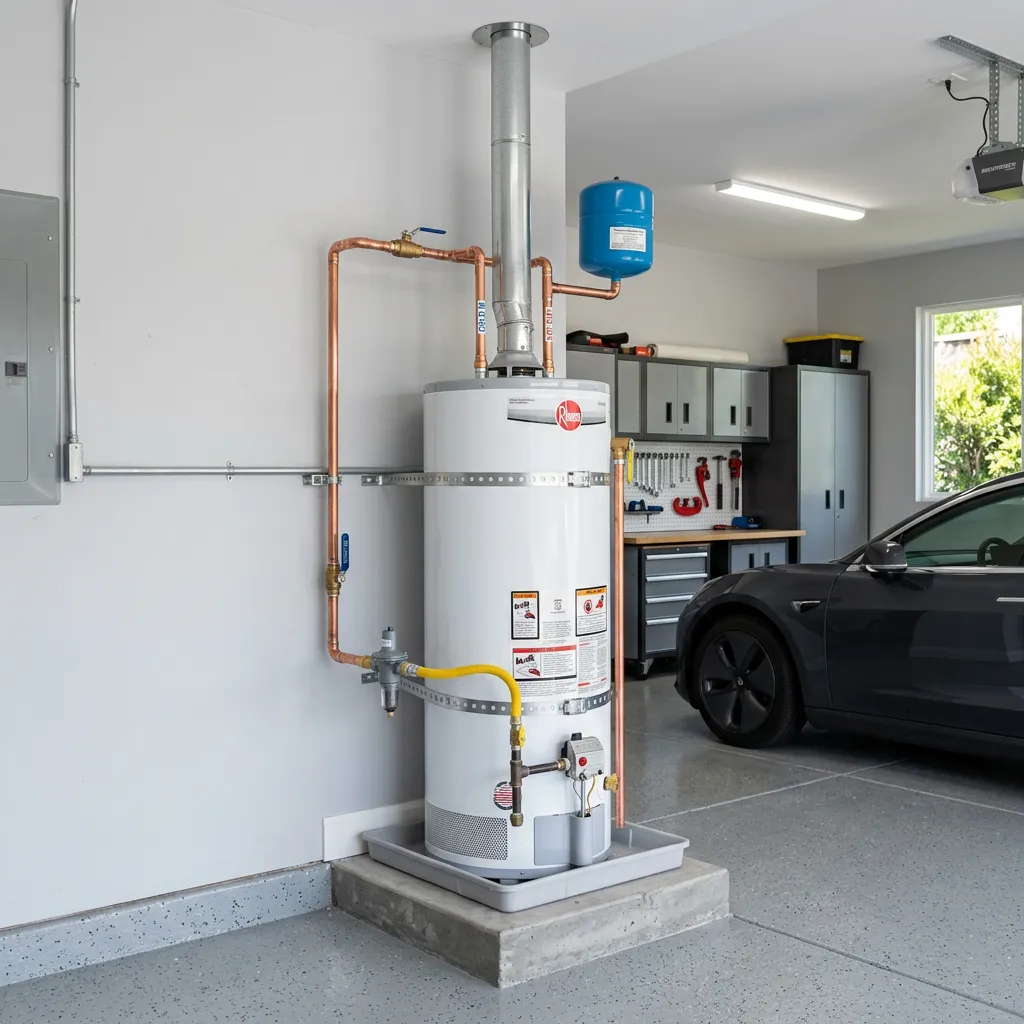
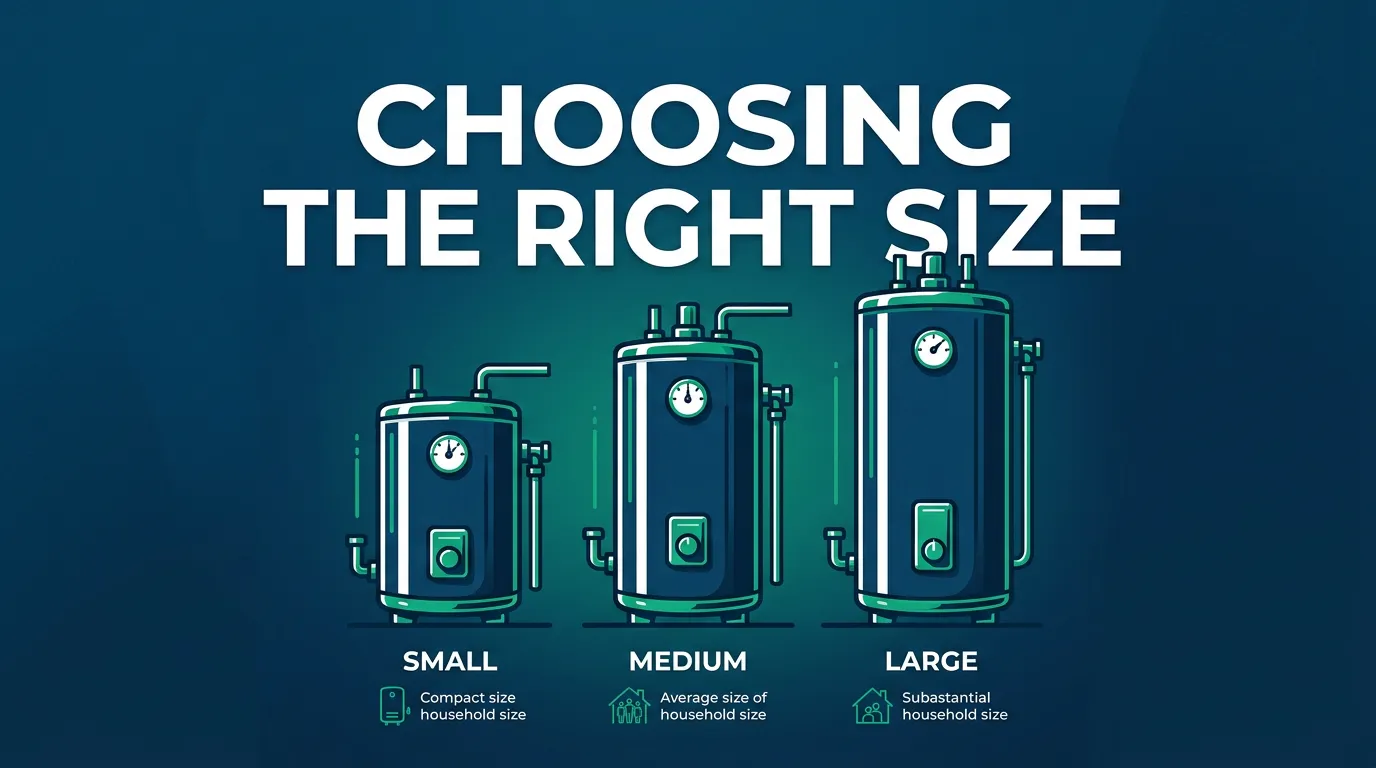
For traditional tank water heater installations, the general rule of thumb is based on the number of people in your household. Here's the breakdown:
| Household Size | Recommended Tank Size | Peak Hour Demand (Gallons) |
|---|---|---|
| 1-2 people | 30-40 gallons | 30-40 |
| 2-3 people | 40-50 gallons | 40-50 |
| 3-4 people | 50-60 gallons | 50-60 |
| 5+ people | 60-80 gallons | 60-80 |
But hold on — this chart is just a starting point. The real question is what happens during your peak hour. That's the one-hour window when your home uses the most hot water. Think: morning chaos. Two showers running, the dishwasher going, and someone doing a load of whites. If your peak hour demand outstrips your tank's "first hour rating" (FHR), you're going to feel it.
How to Calculate Your Peak Hour Demand
Add up the hot water each activity uses during your busiest hour:
- Shower: 10-15 gallons per use
- Dishwasher: 6-10 gallons per load
- Washing machine (hot): 7-12 gallons per load
- Hand washing/kitchen sink: 2-4 gallons per use
- Shaving: 2 gallons
Total it up. That number is what you need your tank's FHR to match or exceed. You can find the FHR on the unit's yellow EnergyGuide label. If your math says 45 gallons and the unit you're eyeing has an FHR of 52, you're golden.
Tankless Sizing: A Different Ball Game
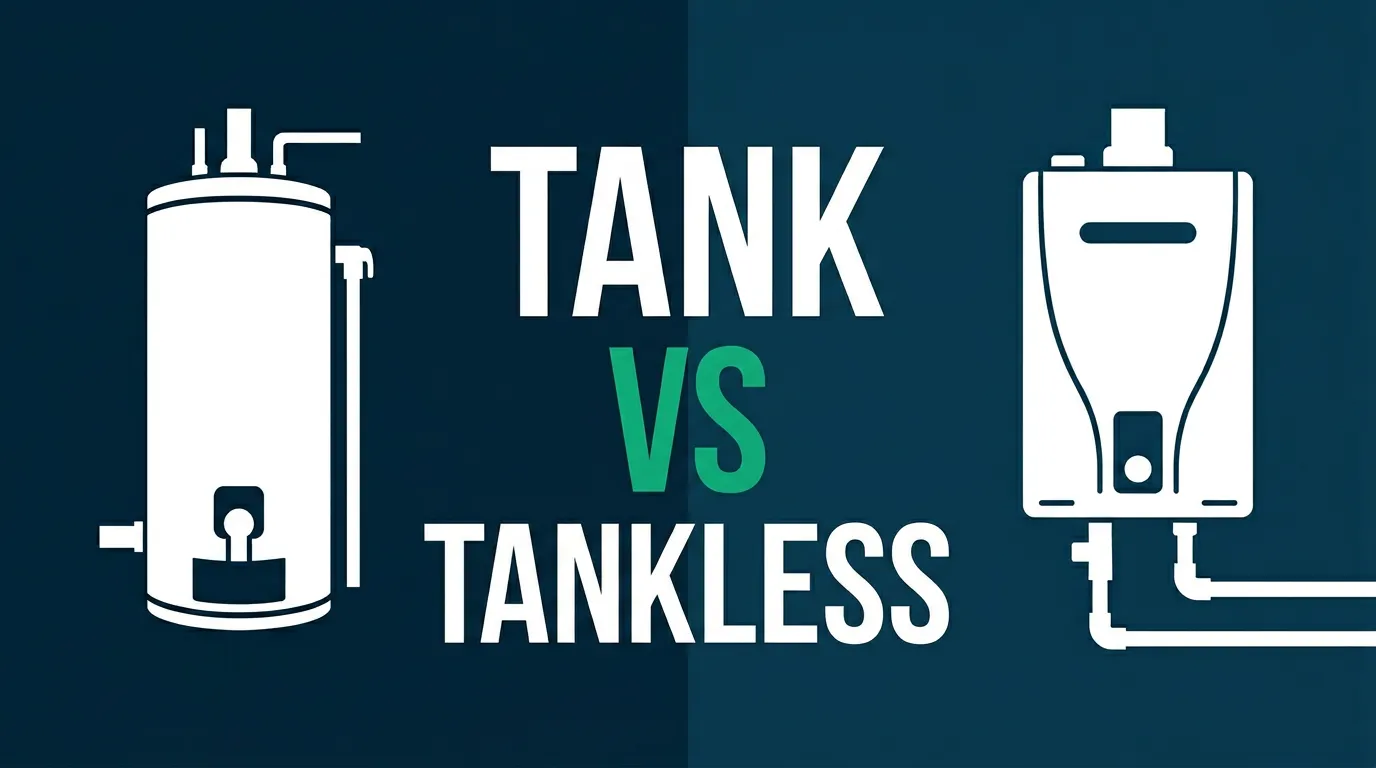
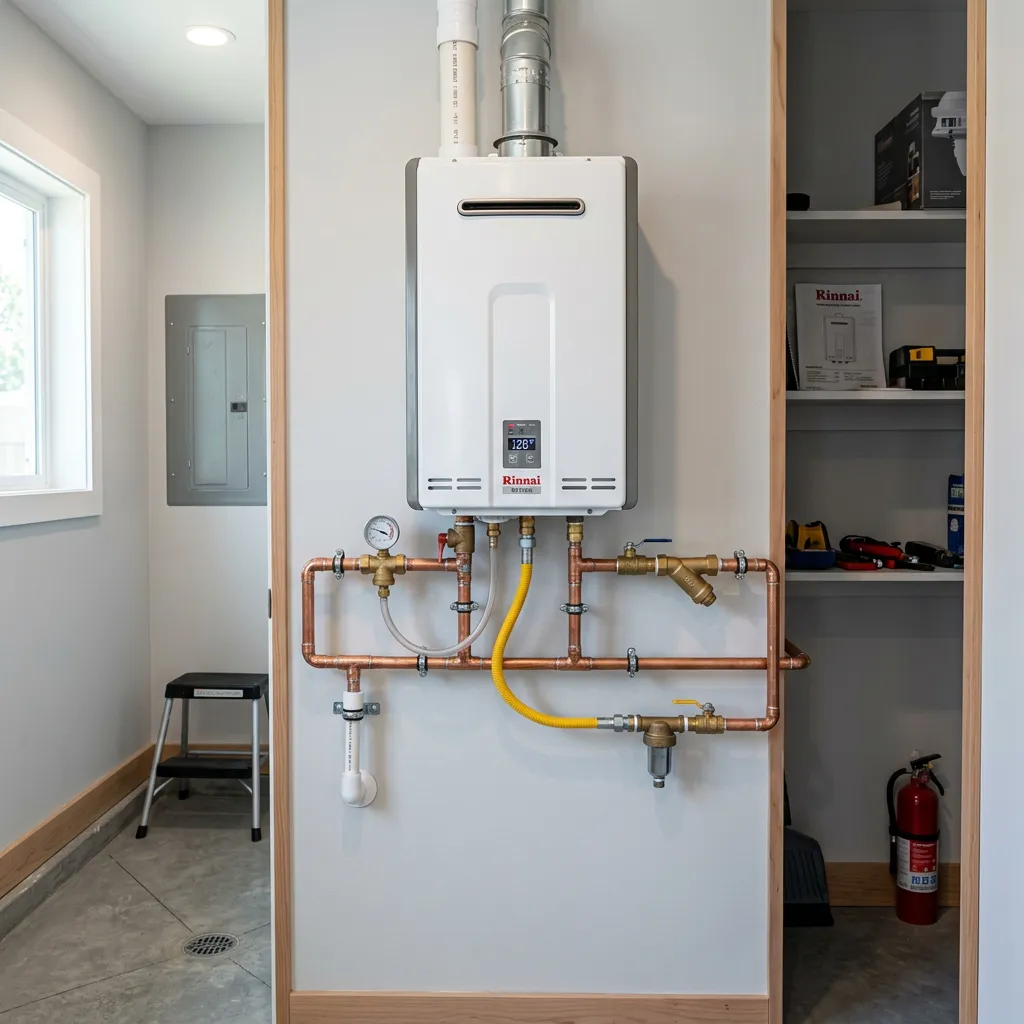
If you're considering going tankless — and honestly, for a lot of Santa Cruz homes, we think it's the move — you need to think in terms of flow rate (gallons per minute, or GPM) and temperature rise, not tank capacity.
Step 1: Add Up Your Simultaneous Flow
Figure out what you'll run at the same time. A shower uses about 2.0-2.5 GPM. A kitchen faucet is around 1.5 GPM. A dishwasher pulls about 1.5 GPM. If you want two showers and a faucet running at once, you need a unit that can handle roughly 6-7 GPM.
Step 2: Calculate Temperature Rise
This is where Santa Cruz gives us a nice little advantage. Our incoming groundwater temperature sits around 55-60°F year-round thanks to our mild coastal climate. If you want 120°F at the tap, that's only a 60-65°F rise. Compare that to, say, Minnesota, where groundwater can drop to 35°F in January — they need a 85°F rise. That means a tankless unit rated for our area will deliver noticeably more GPM than the same unit installed in a colder state. Score one for the Central Coast.
Tankless Sizing Quick Guide
| Simultaneous Use | Required GPM | Recommended Unit |
|---|---|---|
| 1 shower + 1 sink | 3.5-4.0 GPM | Small tankless (Rinnai V53e or similar) |
| 2 showers | 4.5-5.0 GPM | Mid-range tankless (Navien NPE-180A) |
| 2 showers + dishwasher | 6.0-7.0 GPM | High-output tankless (Rinnai RU199iN) |
| 3+ showers + appliances | 8.0+ GPM | Multiple units or commercial-grade |
Santa Cruz Climate: Working in Your Favor
We mentioned the mild groundwater temps, but our climate plays into sizing in another way too. Santa Cruz's average winter lows hover around 40°F — you're not dealing with frozen pipes or the kind of brutal cold snaps that hammer the Midwest. That means your water heater isn't fighting to heat frigid water from the main, and your maintenance needs are a bit kinder year-round.
The flip side? Our coastal humidity and salt air can be rough on outdoor tankless units. If you're near the coast — West Cliff, Pleasure Point, Capitola Village — make sure your installer uses a proper weatherproof enclosure and considers corrosion-resistant models. Trust us, we've replaced plenty of units that corroded way before their time because nobody accounted for the sea air.
The Cottage Factor: Santa Cruz's Unique Housing Stock
Let's be real — Santa Cruz isn't exactly known for McMansions. Our housing stock leans heavily toward cottages, bungalows, converted Victorians, and compact homes built in the '40s through '70s. This creates a few specific sizing challenges:
- Limited space: A 60-gallon tank might not physically fit in your closet-sized utility area. Tankless units mount on walls and free up serious square footage — a big win for small Santa Cruz homes.
- Shared walls and plumbing: In duplexes and converted homes, hot water lines can be long. Longer runs mean more heat loss, which means you may need slightly more capacity than the charts suggest.
- Multiple dwelling units: ADUs (accessory dwelling units) are everywhere here now. If you've added a granny flat or converted your garage, your old 40-gallon tank is almost certainly undersized. Consider a replacement with either a larger tank or a tankless system that can serve both units.
Gas vs. Electric: Does It Affect Sizing?
Yes, a bit. Gas water heaters generally have faster recovery rates — meaning they reheat a full tank quicker. A 40-gallon gas tank with a high FHR can sometimes outperform a 50-gallon electric tank in real-world use because it bounces back faster between heavy draws. If you're on the fence between two sizes and you're running gas, you can often go with the smaller option. Electric? Play it safe and size up.
For a deeper dive, the U.S. Department of Energy's water heater sizing guide is a solid resource with additional calculation tools.
Our Honest Recommendation
After 15+ years of installing and repairing water heaters across Santa Cruz County — from the redwood-shaded cabins up in Boulder Creek to the beach flats downtown — here's what we tell most homeowners:
- Household of 1-2: A 40-gallon gas tank or a mid-range tankless unit. Keep it simple.
- Household of 3-4: A 50-gallon tank (gas preferred) or a tankless unit rated at 5+ GPM. This is the sweet spot for most Santa Cruz families.
- Household of 5+ or ADU situations: Go tankless. Seriously. Unlimited hot water, compact footprint, and no more fights over who showered too long.
Not sure where you land? Give us a call at (877) 317-6906. We'll look at your household size, plumbing layout, and usage patterns and recommend the right unit — no upselling, no fluff. Just honest advice from your local Santa Cruz water heater crew.